Paris Fashion Week AW26: The 5 Structural Trends Defining the Gulf’s New Uniform
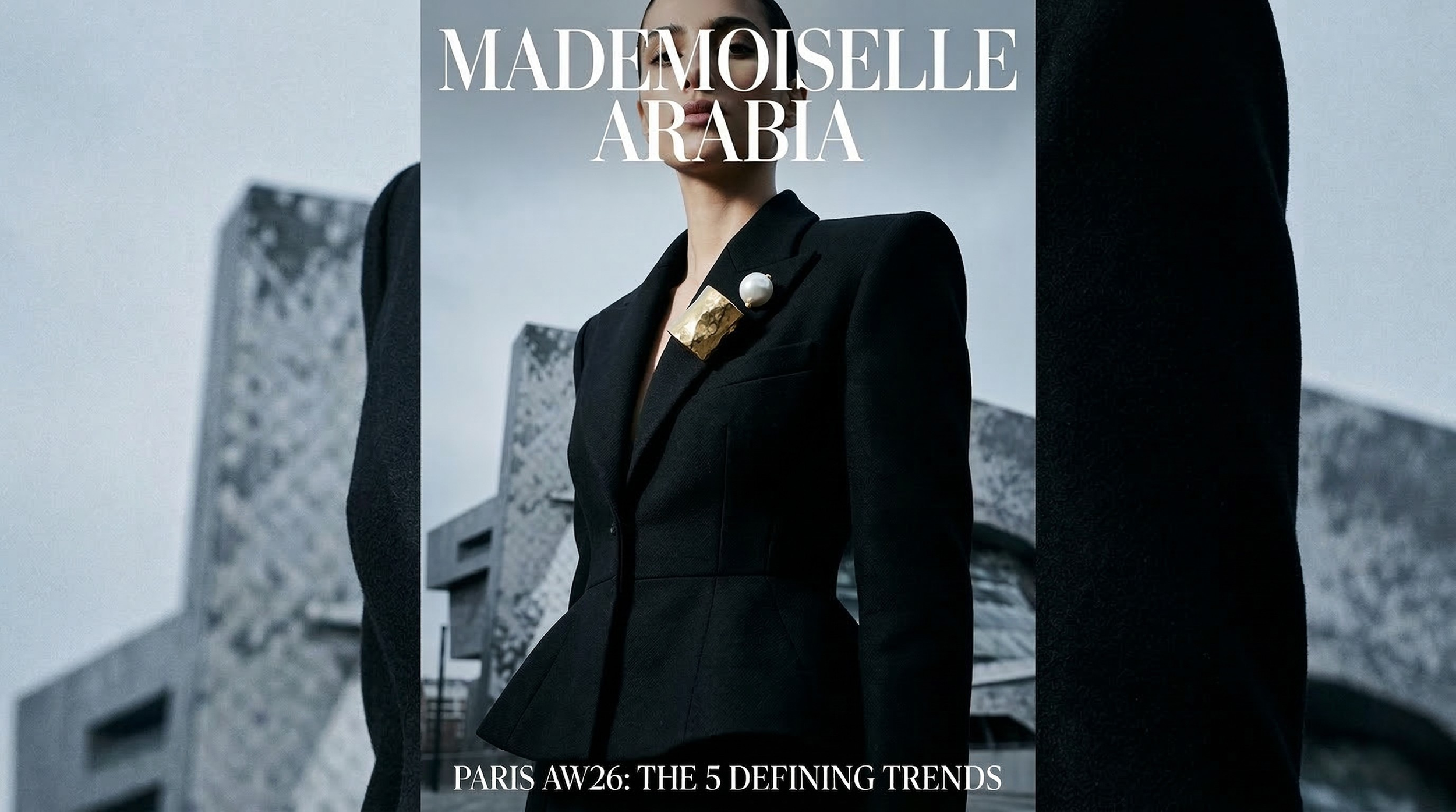
Forget 'Quiet Luxury.' Paris has shifted toward a new, louder form of sovereignty. For the woman of the Middle East, the Autumn/Winter 2026 runways weren't just about fashion—they provided the architectural blueprints for a new era of regional power.
Paris has spoken, and the message is one of Rigor and Resilience. As the world looks to the Middle East as the new frontier of high-culture, the Parisian houses have responded with collections that prioritize structure over decoration. At Mademoiselle Arabia, we decode the five pillars of the AW26 season that will define the streets of Riyadh, Dubai, and Manama.
The Peplum Reclaims the Waist
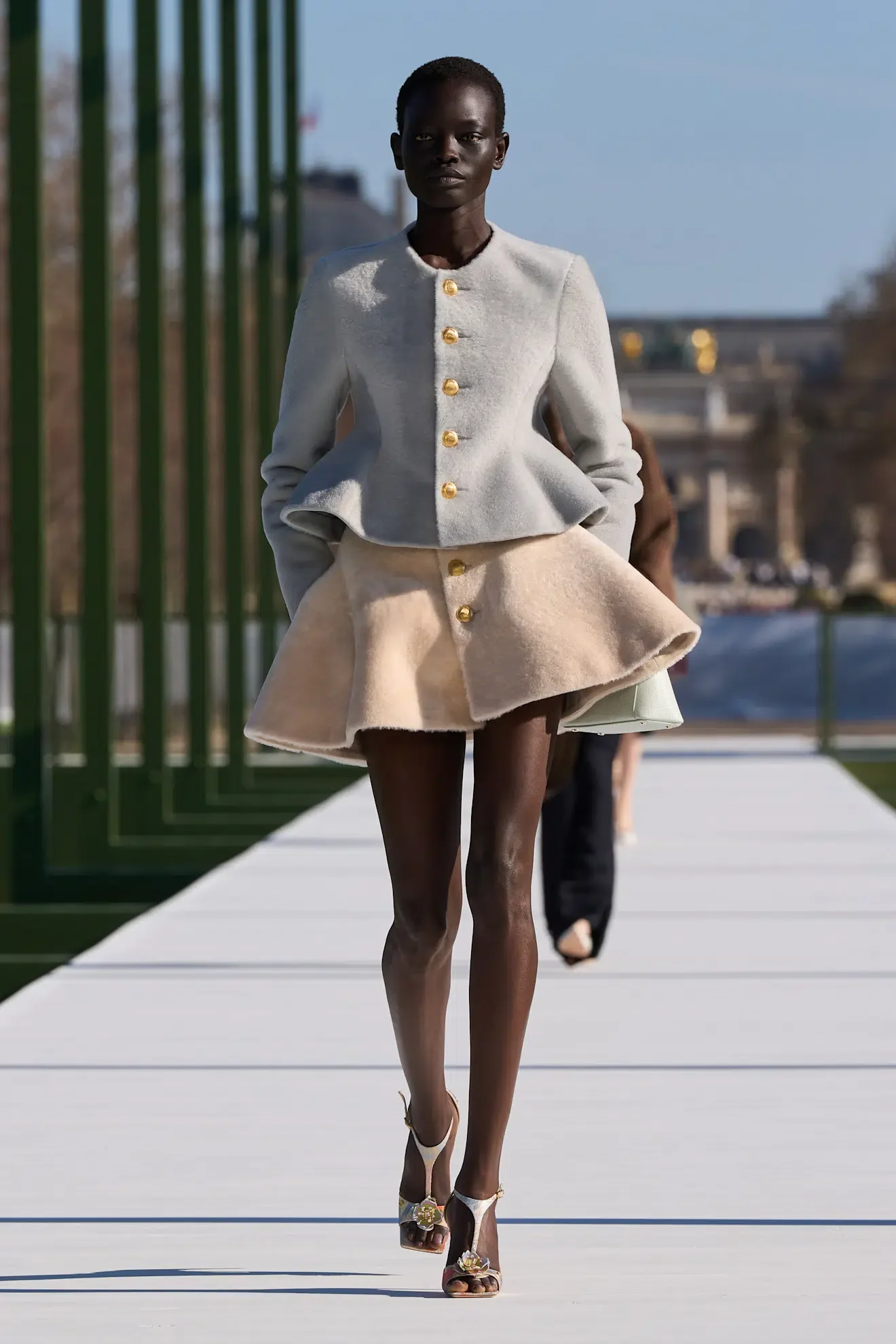
The most significant architectural shift this season is the return of the Peplum. But forget the soft, decorative iterations of the past. In the hands of the Parisian masters, the peplum has been reimagined as a structural cantilever.
The Look: Sharp, flared waistlines on blazers and structured tops that create an exaggerated hourglass silhouette.
The Intelligence: This isn't about "pretty" dressing; it’s about Geometric Authority. By reclaiming the waist through rigid construction, the silhouette creates a powerful juxtaposition between the strength of the shoulder and the precision of the hip. It is a nod to 1940s couture, updated for the 2026 boardroom.Mineral Modesty (Louis Vuitton / Al-Ula Style)
The Architectural Rise: Over-the-Knee Sovereignty
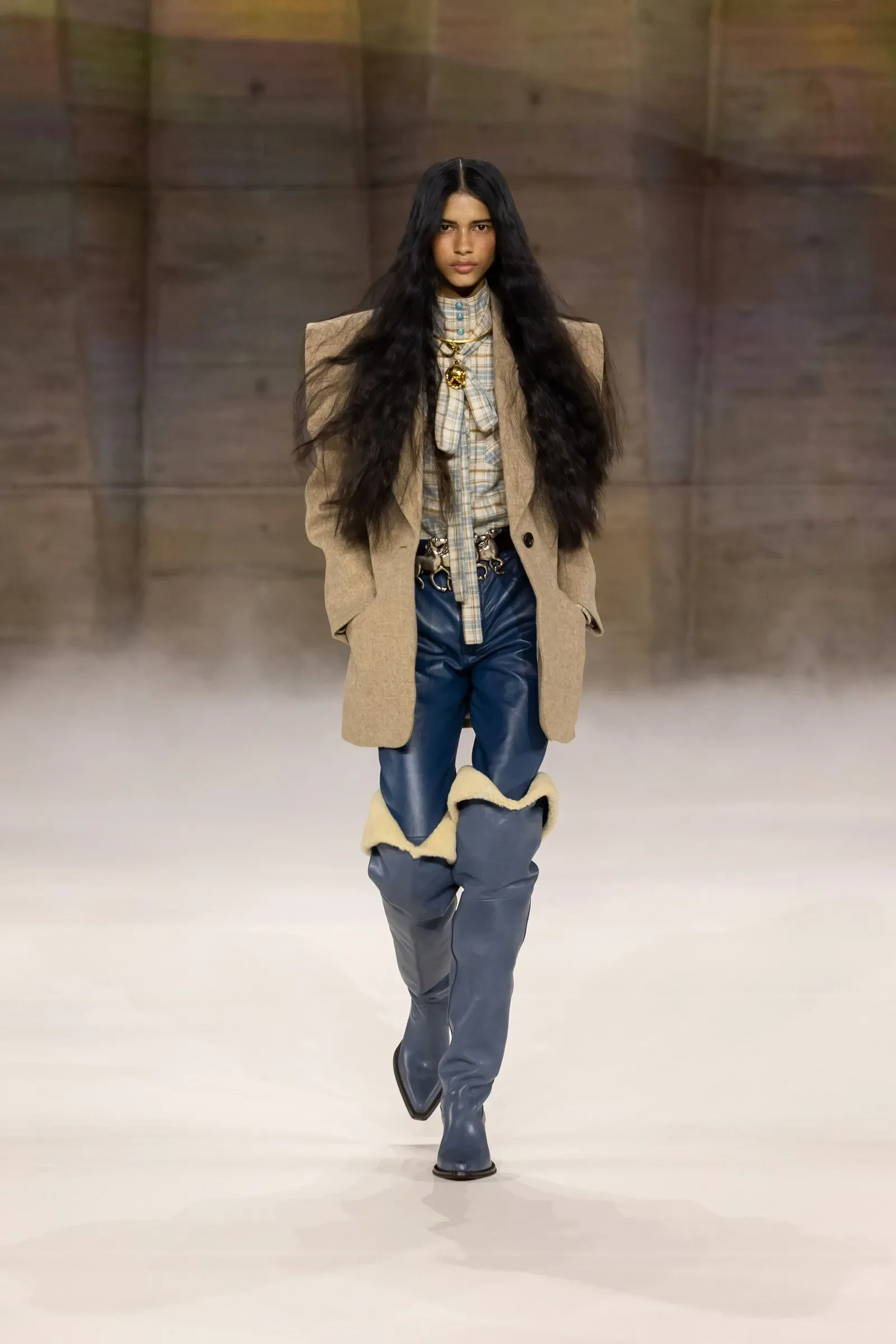
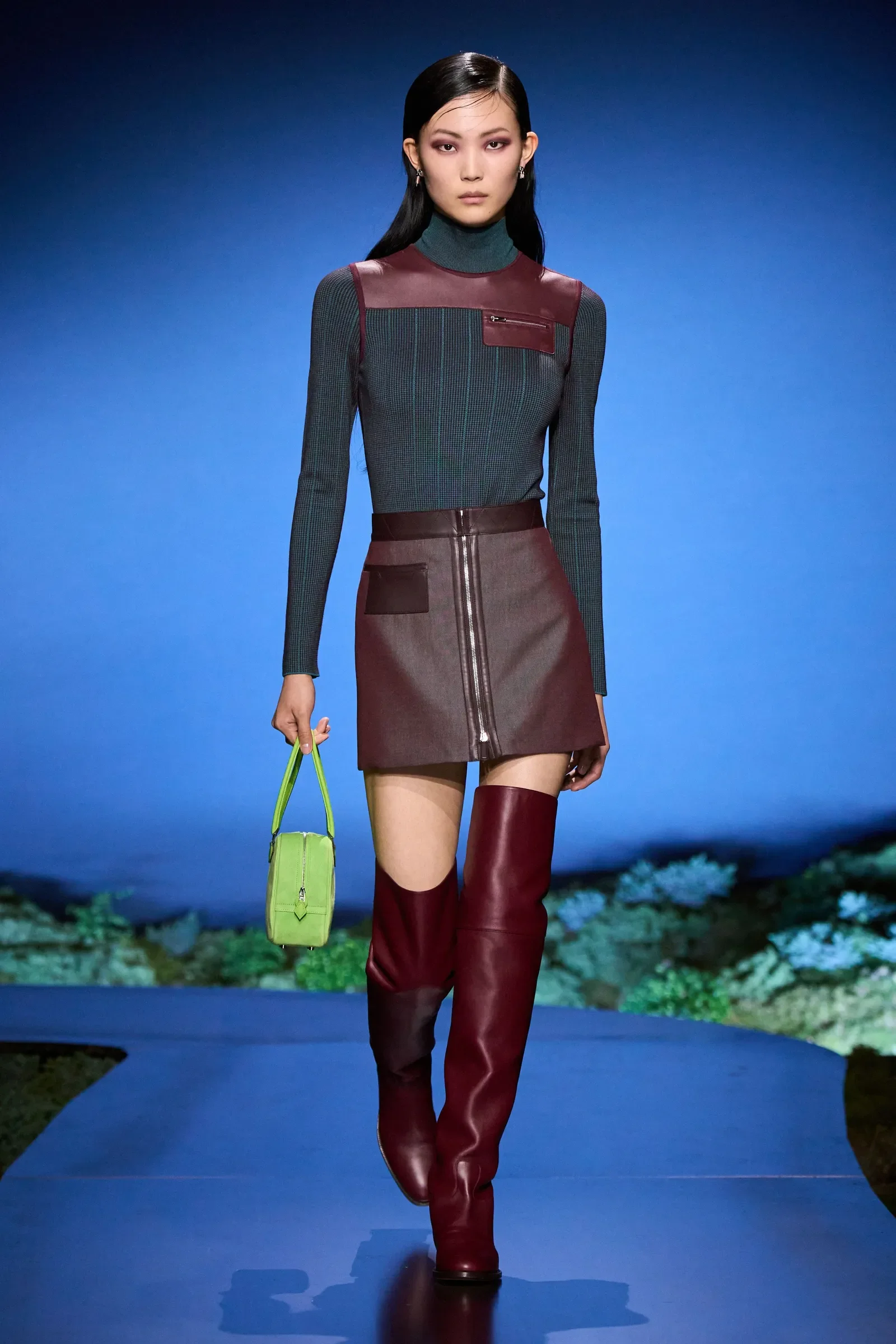
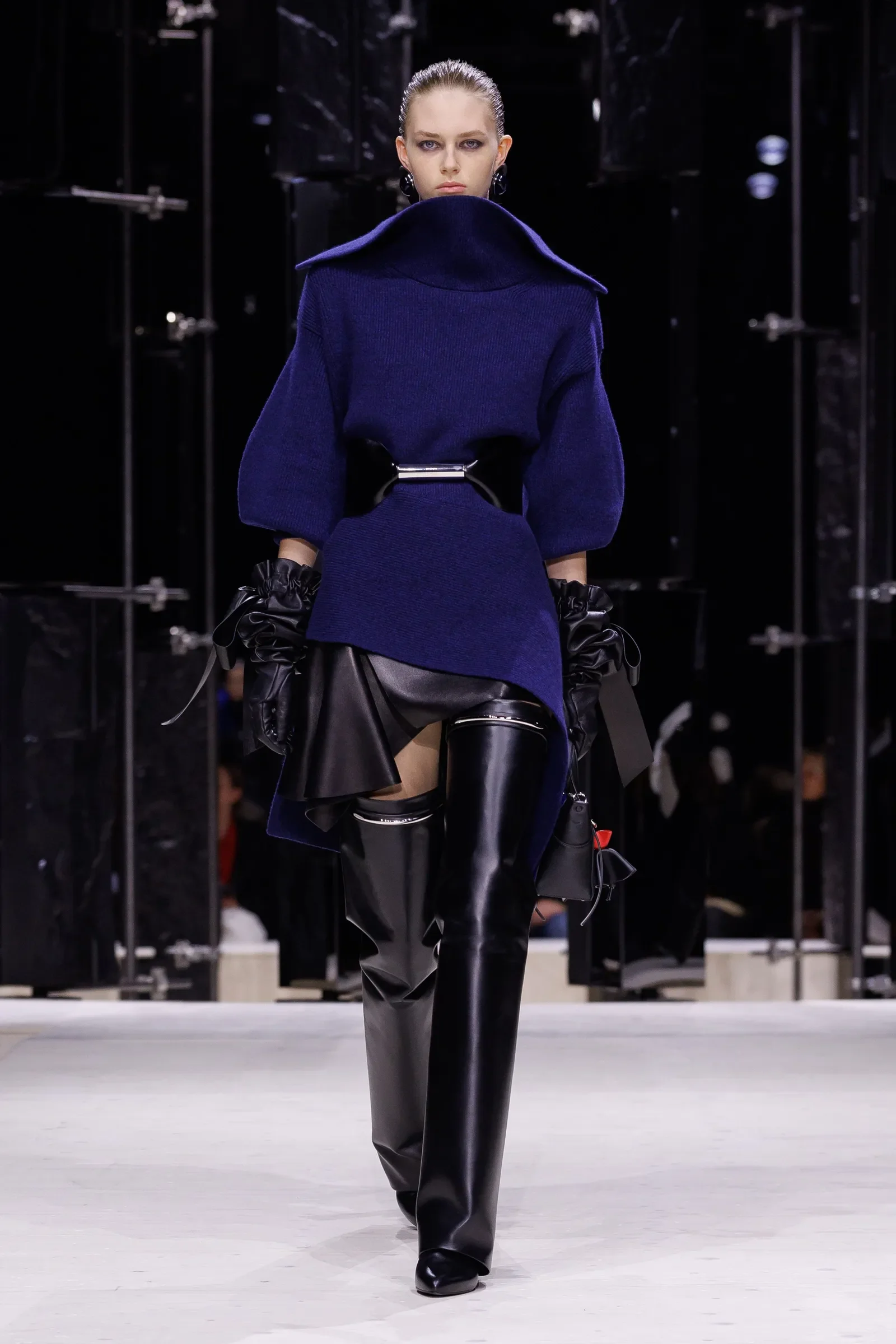
If the Paris runways proved anything this season, it is that the Over-the-Knee (OTK) boot has been reclaimed as the definitive accessory of 2026. Rising well above the knee, these silhouettes offer a sense of undeniable confidence and structural allure.
The Sleek Rigor (Givenchy): Models at Givenchy walked in polished, straight silhouettes. Available in both sleek black leather and intricate jacquard, these boots functioned as a second skin—linear, sharp, and uncompromising.
The Bohemian Volume (Chloé): In contrast, Chloé introduced a relaxed, nomadic feel with slouchy leather boots featuring oversized fold-overs and fur lining. It is the return of the "High-Chic Nomad."
The Equestrian Zenith (Hermès): At Hermès, the boots were ultra-sensual, fitting with the precision of a surgical glove. They convey a rich equestrian elegance that feels deeply rooted in noble heritage.
The Intelligence: For our audience, the OTK boot is the new foundation of Fluid Modesty. By extending the boot beyond the hemline of a skirt or tunic, you create a singular, continuous column of texture. It is a styling move that prioritizes the silhouette over the skin.
The Geometry of Authority: Checks in Command
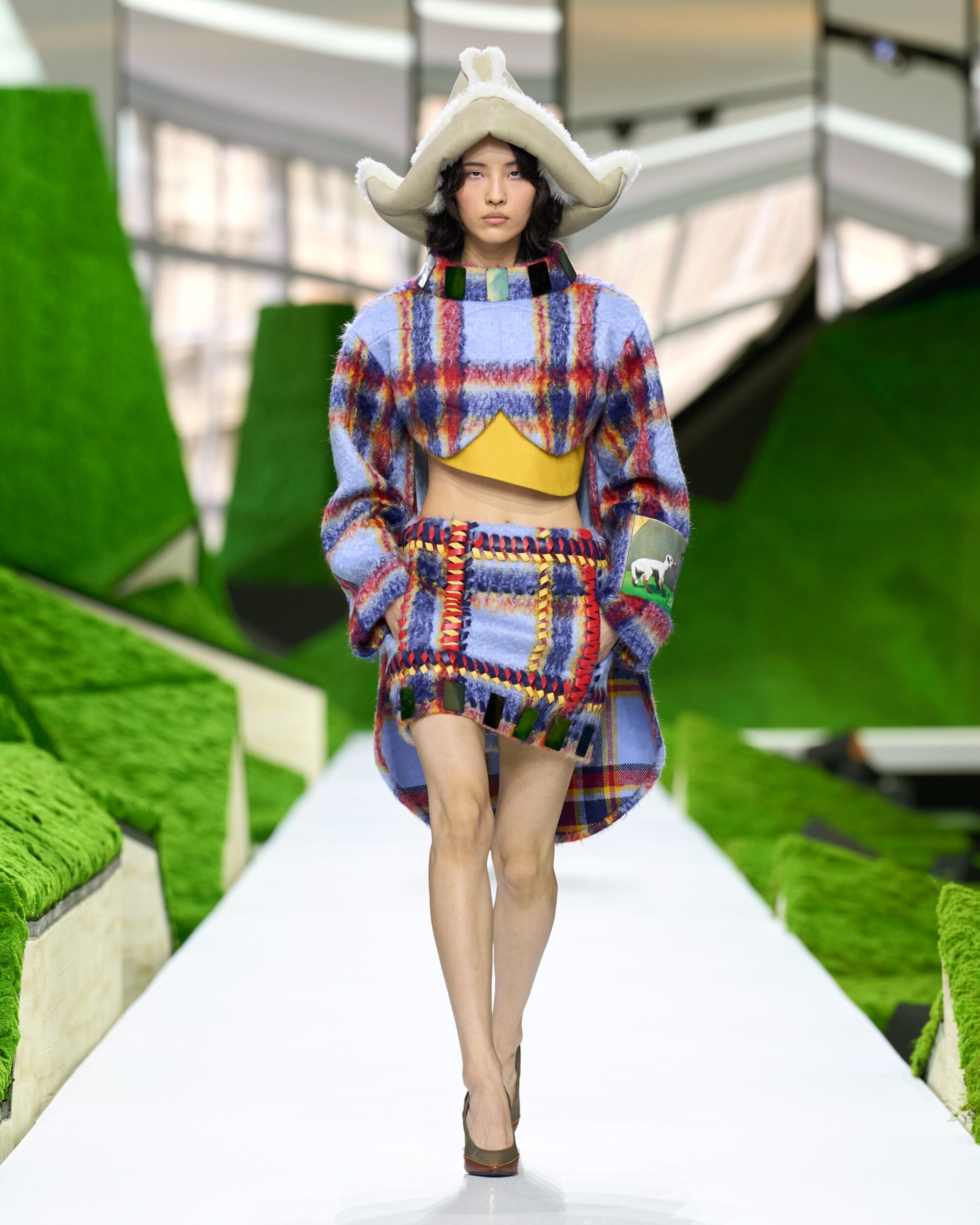
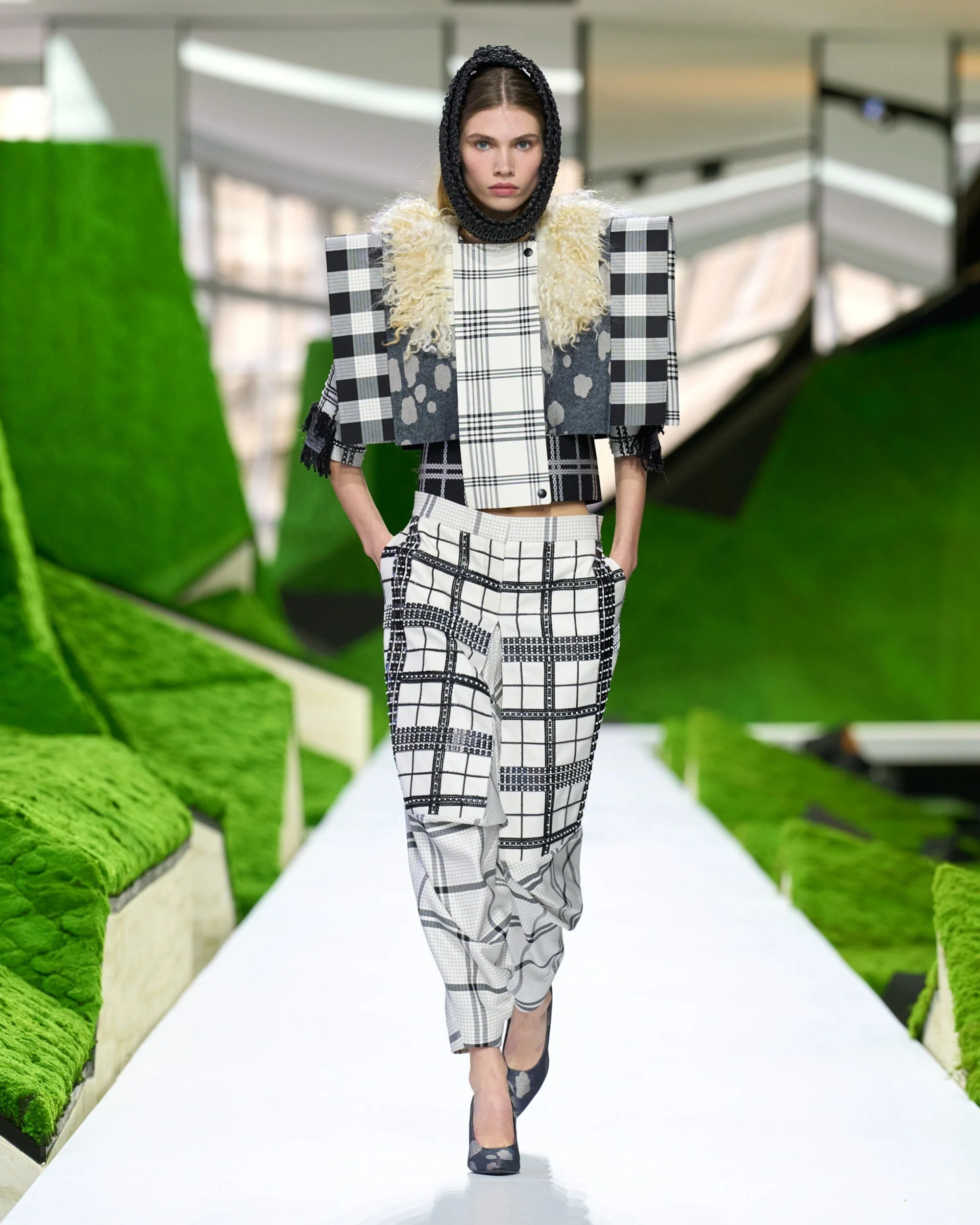
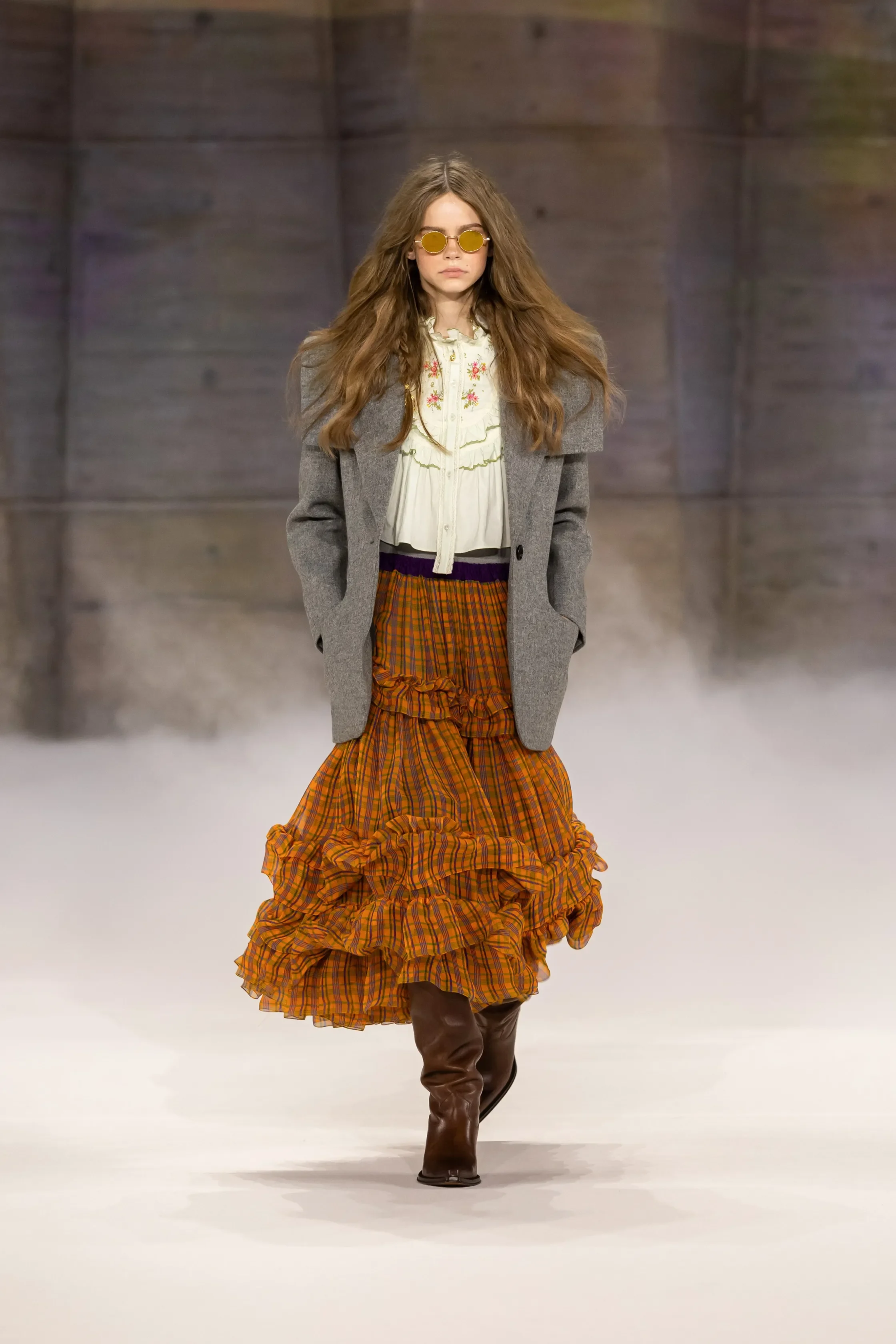
The enduring pattern of the check dominated the Paris runways this season, but it has been stripped of its traditional, rustic connotations. Designers have reimagined the weave for a contemporary, sharp moment.
The Maximalist Grid (Louis Vuitton): Nicolas Ghesquière delivered a bold, architectural approach through strategic pattern mixing. By layering varied scales of checks, Louis Vuitton transformed the fabric into a 3D visual landscape.
The Bohemian Tier (Chloé): At Chloé, the intricate tartan was softened. A flowy, tiered skirt provided a nomadic, effortless take on the pattern—proving that geometry can also be fluid.
The Legacy Edge (Vivienne Westwood): At Andreas Kronthaler for Vivienne Westwood, the British tartan legacy was upheld but sharpened. It balanced heritage with a modern, defiant edge that resonates with the bold spirit of the GCC.
The Intelligence: We view the AW26 check not as a print, but as a Structural Grid. For our audience, wearing a perfectly aligned tartan is a statement of personal order and intellectual rigor.
The Architectural Counterpoint: Fashion Gets Structured
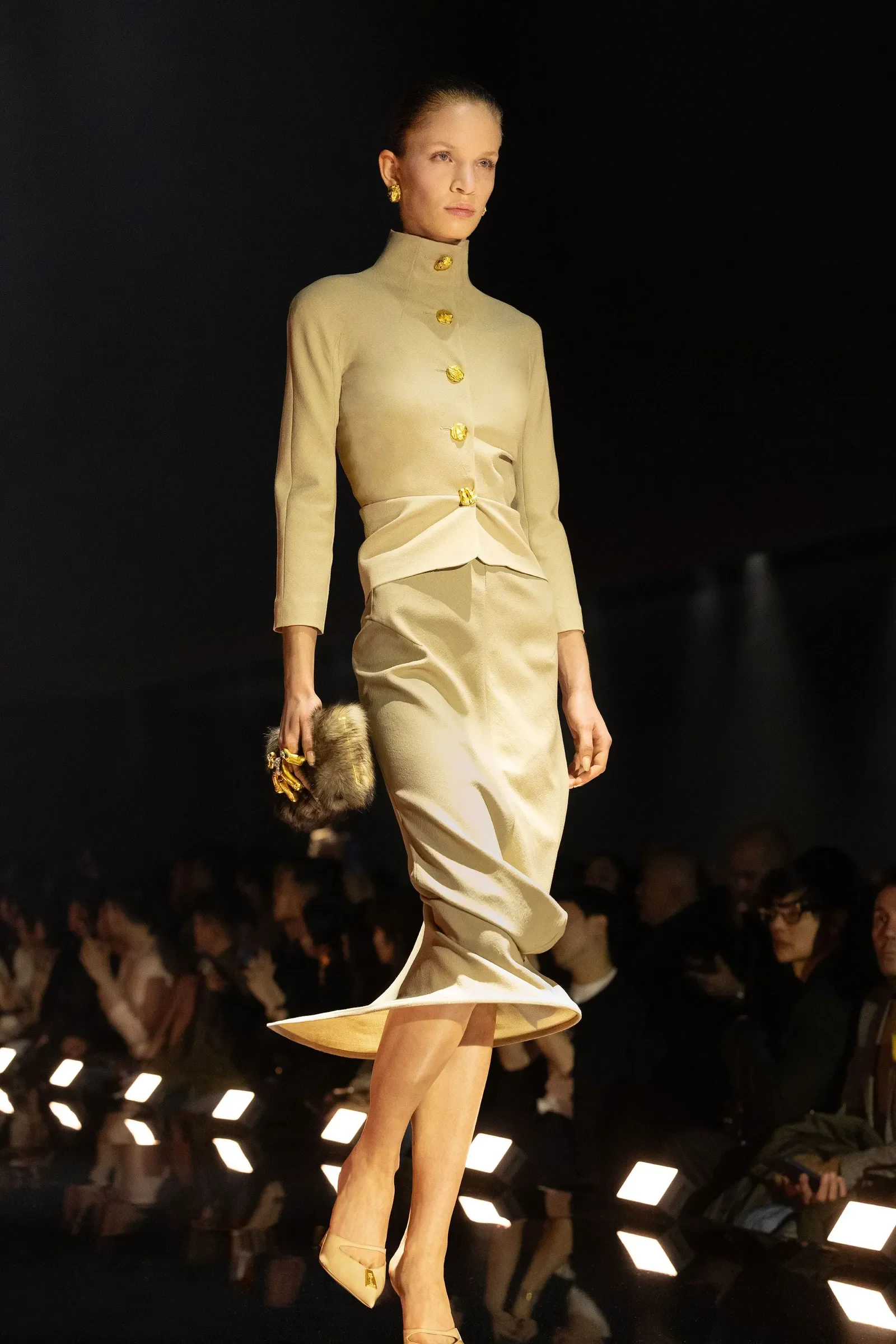
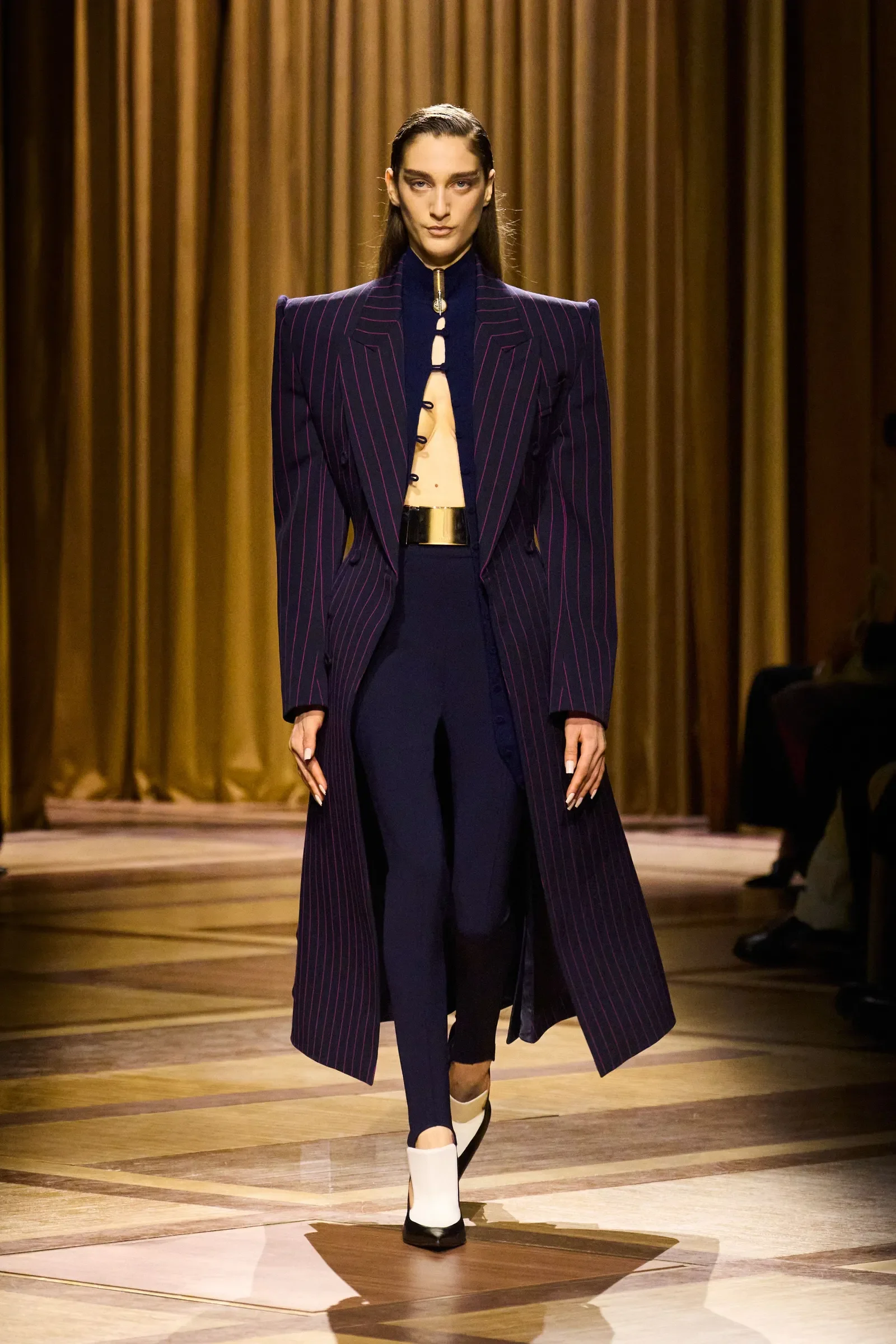
Amidst a season otherwise defined by fluid fabrics and sheer layers, Structure emerged as the necessary, powerful anchor. From sharply engineered jackets to sculpted midi-dresses, the Paris runways embraced the architectural side of the silhouette.
The Geometry of Power (Mugler): Drawing on the house’s legacy of commanding presence, the Mugler silhouettes emphasized precision. The jackets were not just worn; they were inhabited. With hyper-defined shoulders and sharp geometry, they turned the human form into a living monument.
Controlled Volume (Schiaparelli): At Schiaparelli, Daniel Roseberry focused on the firm, defined shape of the skirt. It was a study in precision, where volume was not accidental but strictly controlled, creating a silhouette that felt both surreal and deeply authoritative.
Soft Sculpture (CFCL): In a technical triumph, CFCL utilized engineered fabrics to create dramatic drapes. They turned knitwear into a softly sculpted silhouette, proving that even the most flexible materials can be dictated by structural rigor.
The Intelligence: We call this "The Concrete Silhouette." For the woman of the Middle East, these pieces offer a sense of invulnerability. In a world of fleeting trends, a structured garment is a statement of permanent intent.
The Power of the Veil: Translucency as a Structural Statement
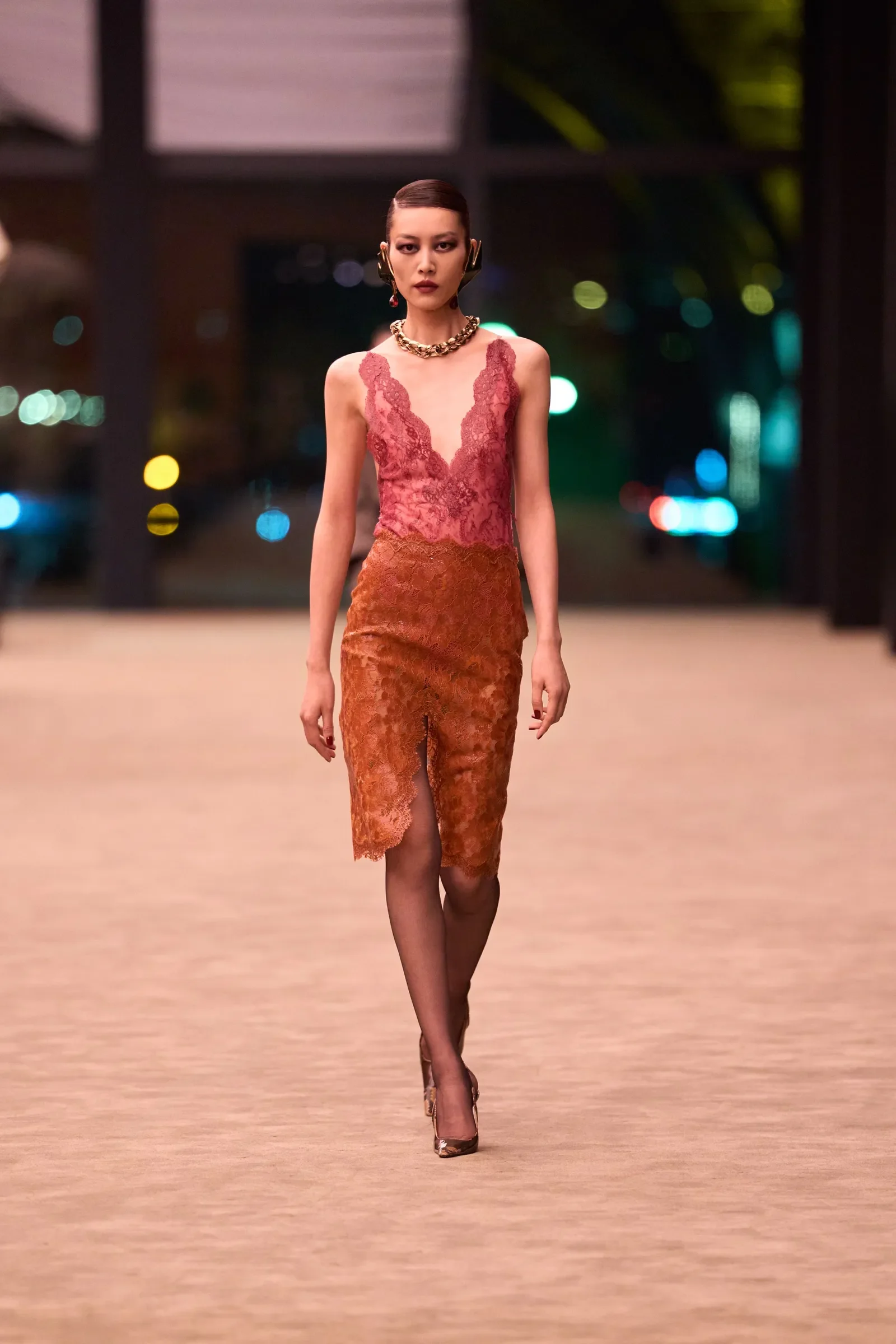
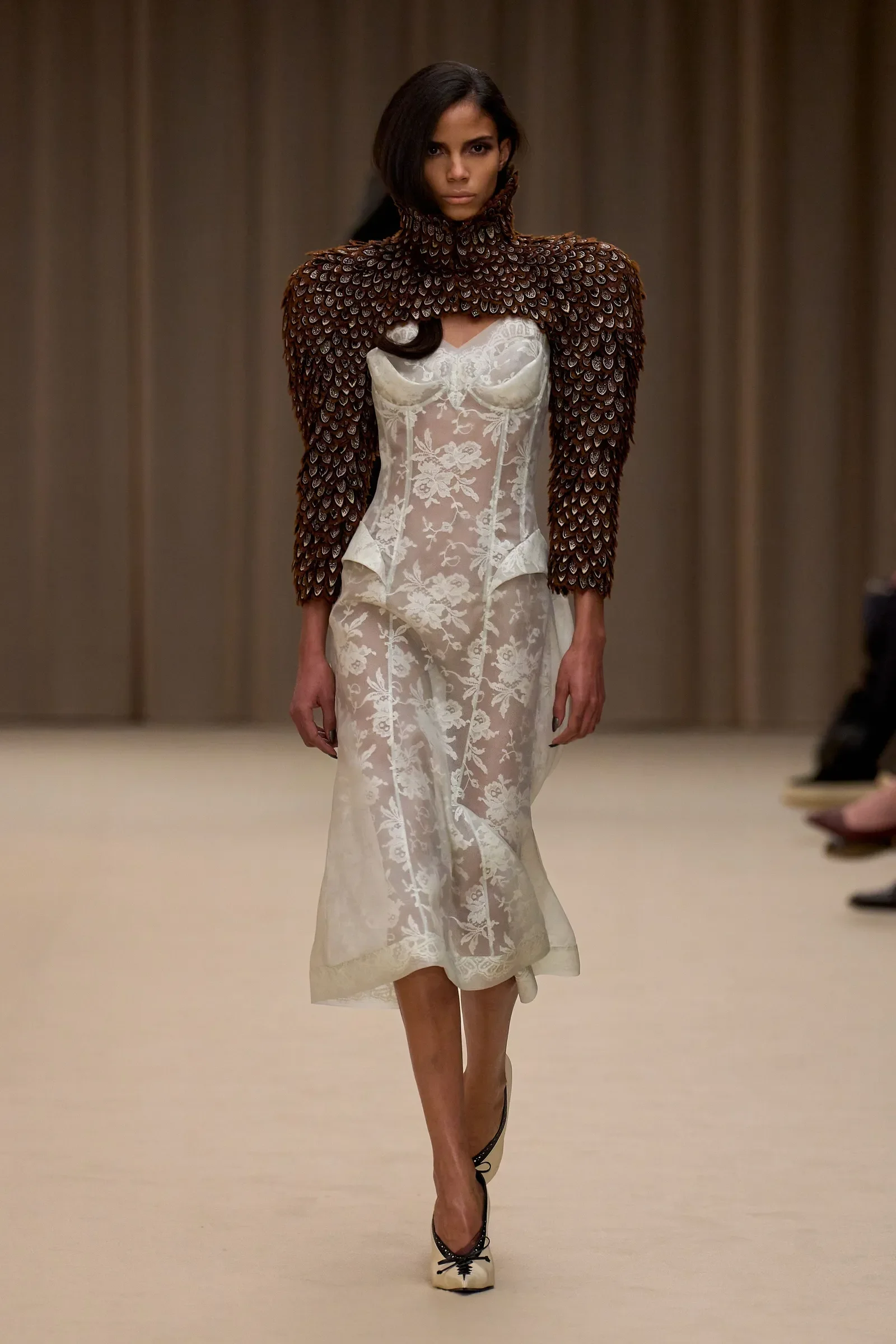
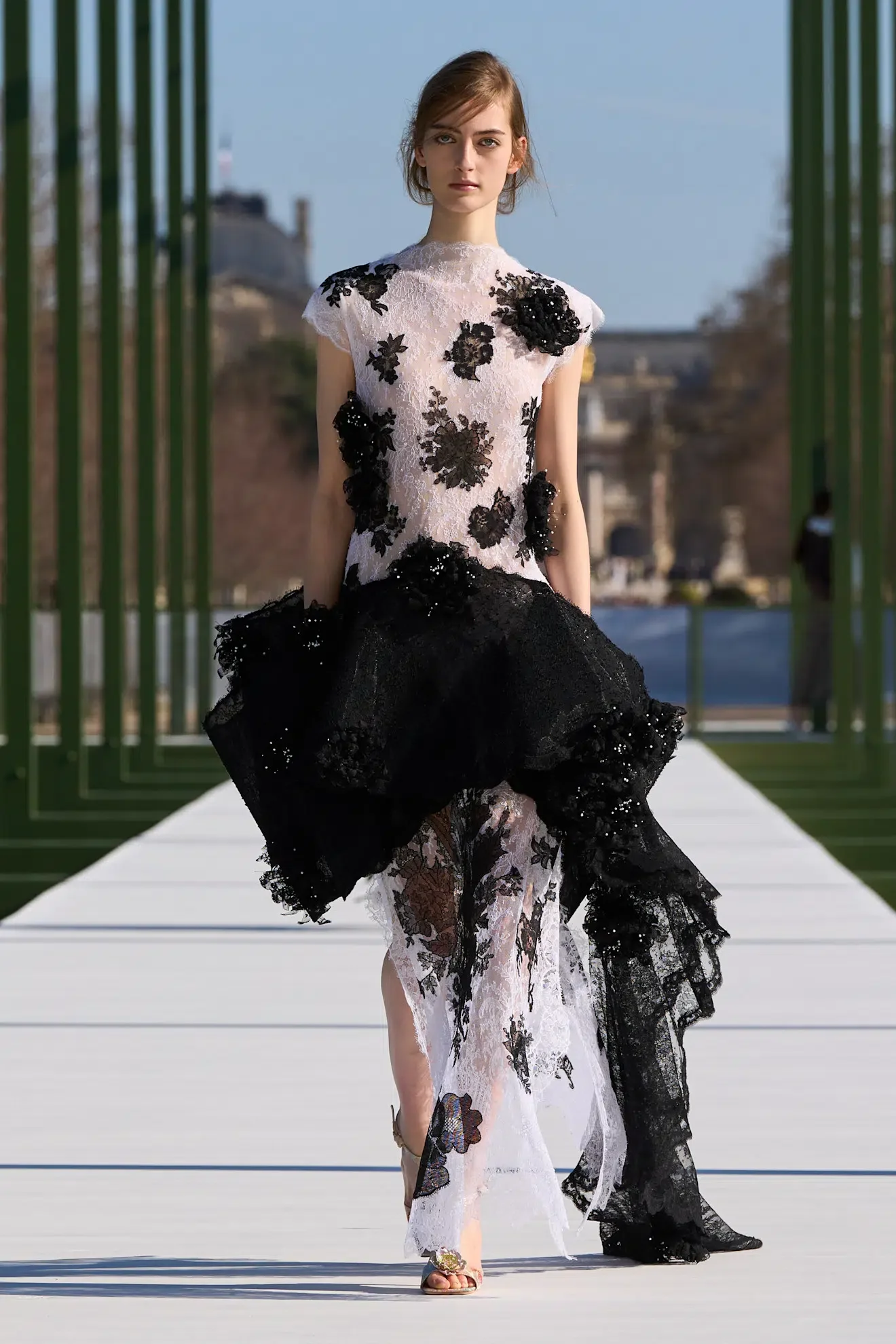
Transparency emerged as a dominant pillar of the AW26 collections, redefined not by what it reveals, but by how it filters the light. Designers utilized the technical properties of lace, organza, and crystalline fabrics to build silhouettes that feel both ethereal and impenetrable.
Ethereal Volume (Alexander McQueen): Seán McGirr presented a series of off-white organza gowns that functioned as light-catching sculptures. These pieces used the weightlessness of the fabric to create a dream-like, floating architecture around the body.
The Lacquered Lace (Saint Laurent): Anthony Vaccarello continued the house’s long-standing dialogue with lace, this season introducing a futuristic silicone-coated finish. The result is a cold, refined elegance that balances raw sensuality with a protective, modern sheen.
Crystalline Craft (Mame Kurogouchi): Drawing from the artisanal precision of Japanese Wa-glass, Mame Kurogouchi engineered textiles with the clarity of crystal. These transparent layers serve as a testament to the intersection of traditional craft and high-performance textile design.
The Intelligence: We call this "Layered Sovereignty." For the modern Arab woman, sheer textiles are the ultimate tool for sophisticated depth. When styled under structured outerwear, these translucent fabrics create a multidimensional look that is as intellectual as it is aesthetic.